Current Issue
Our Partners

P3 - NEWS
(11.11.2026 / sbr)
Jowat Symposium 2026: Bonding for Tomorrow’s Circular Economy
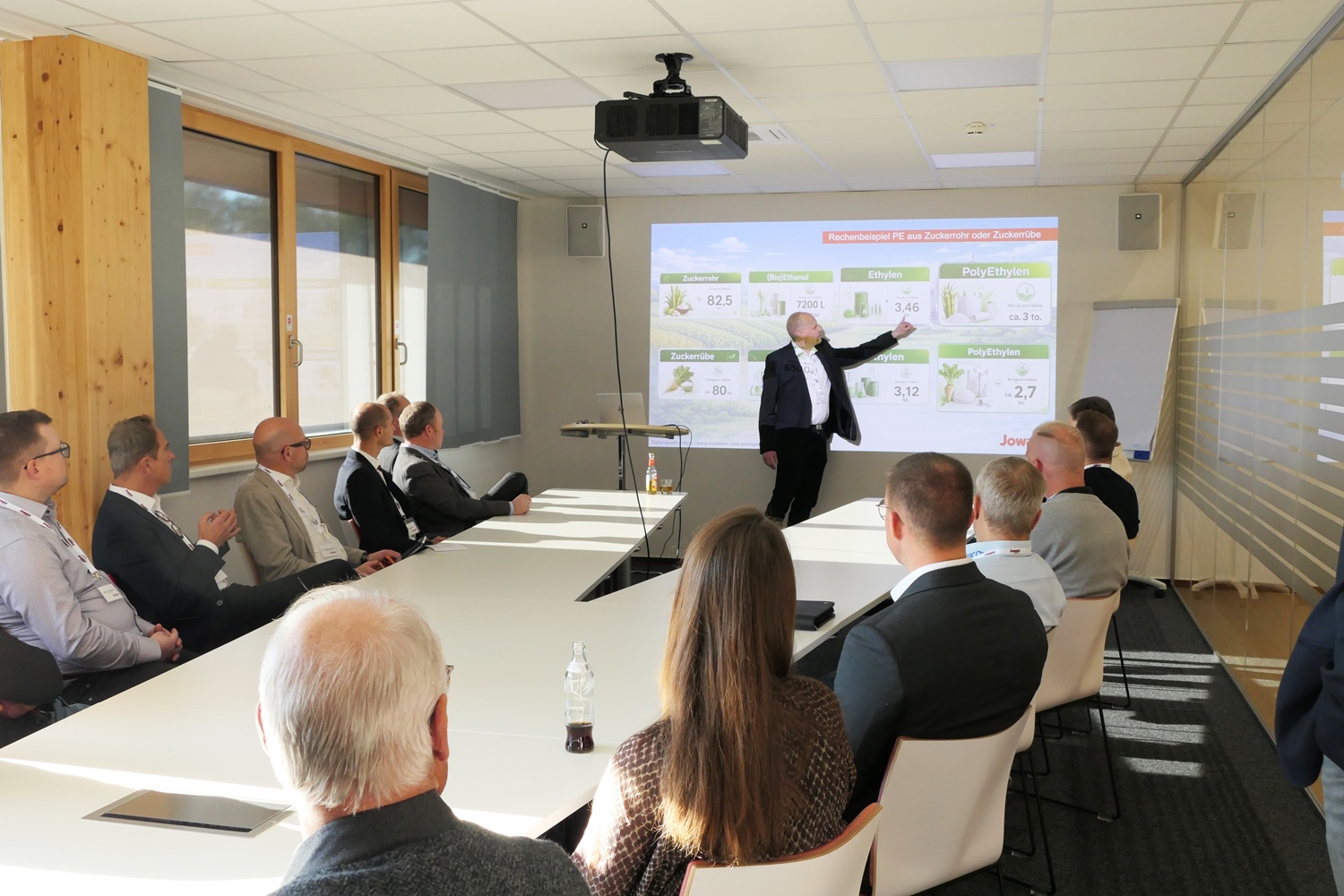
How can adhesives help make industrial value chains more sustainable and better prepared for future challenges? This question was at the heart of the Jowat Symposium 2026 at the House of Technology in Detmold. Experts from industry and academia gathered to discuss current developments in adhesive bonding technology and offer new perspectives on the circular economy.
Building on the symposium’s established format, Jowat broadened its focus this year. For the first time, the focus was not on a single industry but on adhesive bonding itself. Guided by the theme “Bonding for Tomorrow’s Circular Economy,” the symposium examined the challenges facing an industry in transition through a range of different perspectives. Key topics included new raw material sources, biobased and recycled materials, and innovative approaches to high-performance adhesive solutions that also conserve resources.
Technical presentations from academia and industry offered insights into current research and development efforts and described how new materials and technologies could shape the future of bonding. The presentations also made clear that a circular economy involves far more than using alternative raw materials or materials that can remain in circulation. What matters most is a holistic approach to material selection, product design, adhesives, and processes with a focus on the entire life cycle of the product.
The symposium also deliberately explored opportunities beyond today’s applications. Alternative raw material concepts and new approaches to polyurethane development illustrated the opportunities that emerge when established manufacturing methods and material solutions are reimagined.
In addition to the technical presentations, in-depth master classes provided opportunities to examine selected topics more closely and engage directly with experts. As in previous years, face-to-face discussions among adhesive processors, developers, and researchers were an essential part of the symposium.
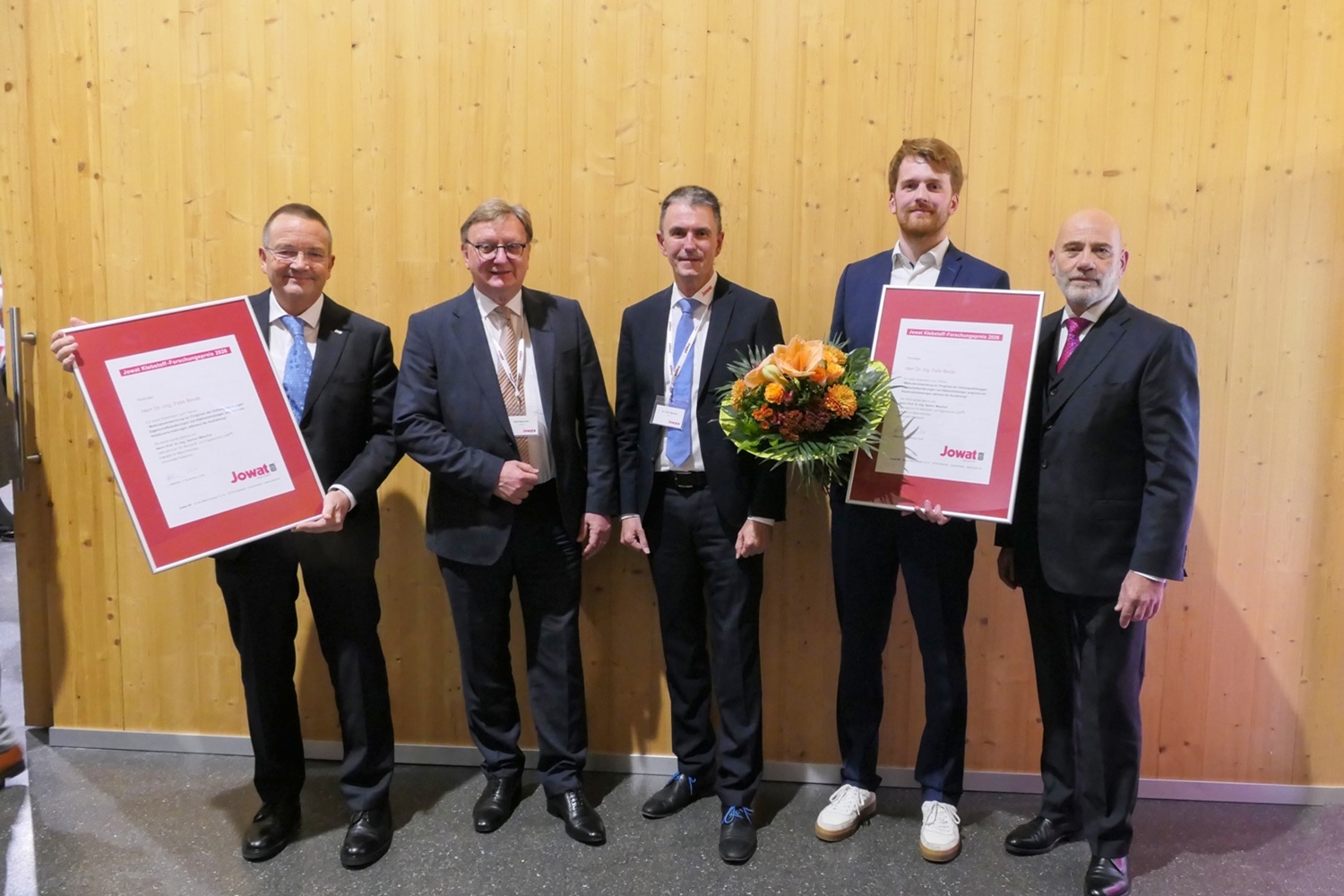
Another highlight of the event was the presentation of the Jowat Adhesive Research Award. By incorporating the award into the symposium, Jowat underscores the importance of dialogue between academia and industry. The award provides a platform for innovative research approaches to inspire advances in bonding technology and its future applications.
The award went to Felix Beule for his outstanding dissertation on the development of methods to predict direction-dependent changes in the properties of adhesive joints due to relative displacement during curing (“Methodenentwicklung zur Prognose der richtungsabhängigen Eigenschaftsänderungen von Klebverbindungen aufgrund von Relativverschiebungen während der Aushärtung”). Beule began working as a research associate at Paderborn University’s Laboratory for Material and Joining Technology (LWF) in 2020 and most recently led its Simulation specialist group. Since November 2025, he has worked as a simulation engineer at LIA GmbH.
The award-winning research addresses a challenge that arises, for example, when bonding steel and aluminum in automotive manufacturing: During curing, differences in the thermal expansion of the materials can cause them to move relative to each other, which can affect the properties of the adhesive joint. Felix Beule systematically investigated these effects and demonstrated that the impact of relative displacement on a joint’s mechanical properties varies with the direction of displacement. Based on his findings, he developed a methodology for experimentally characterizing and numerically predicting these effects, along with a simulation model and a practice-focused method guideline. Together, these tools help account for the effects of manufacturing conditions during the development and designing of structural adhesive joints, enabling more reliable predictions of how their behavior.
“The Jowat Symposium highlights the importance of addressing today’s challenges from a broad perspective that brings together insights from academia, industry, and the field of raw materials. Adhesives play an important role in designing more resource-efficient products, keeping materials in circulation, and advancing industrial processes. This is precisely the exchange we aim to foster through our symposium,” says Ingo Horsthemke, vice president for global marketing at Jowat.
The successful Jowat Symposium highlighted the path toward a more circular economy presents a wide range of challenges. Modern adhesive bonding technology offers an equally broad range of opportunities to support that transition. By fostering dialogue between research and practice, Jowat provides a platform for exchange and promotes new ideas for the bonding of tomorrow.