Current Issue

Our Partners




P3 7-8/2024 en
Case Study
Mixed Forests are the Forests of the Future
Point of View
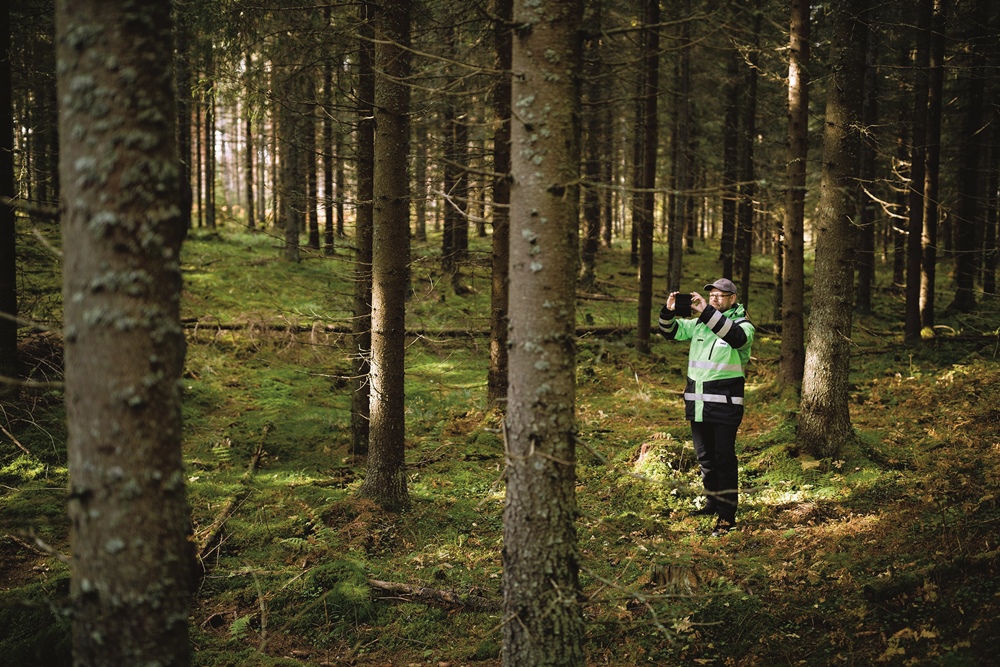
Metsä Board: Climate resilience through forest management.

In 2015, an agreement was signed in Paris by 195 states which committed themselves to restricting the temperature rise to clearly below 2 °C, and preferably below 1.5 °C, compared with pre-industrial times. After nine years, it seems unlikely that the target will be achieved. In Finland, where the temperature is predicted to rise more steeply than the global average, preparations must be made for a climate up to 6–8 degrees warmer than today. Because as climate change progresses, various forms of forest damage are expected to become more common. This risk of damage can be reduced by diversifying the proportions of tree species.
Metsä Board: Climate resilience through forest management.
In general, we can say: Seedling stands established this year will be mature in 80 years on average – and the climate will probably be very different from today then. For example, the rising temperature and the increased carbon dioxide content in the atmosphere accelerate the growth of forests. However, at the same time, the risk of different types of forest damage increases. Preparations for the changes must therefore already be made today, knows Timo Lehesvirta, Leading Nature Expert, Metsä Group: “Nationally, adapting to climate change is one of the most important tasks in Finland. Our future and the competitiveness of our bioeconomy depend on it.”
Climate resilience through forest management
The aim in this is, to increase the forest’s ability to adapt to climate change. One such possibility lies in appropriate forest management. This is why Metsä Group, which also encompasses Metsä Board, adopted its regenerative forestry principles in the spring of 2023. The goal of these principles is to ensure that forests are transferred to the next generation in an increasingly vigorous and climate-resilient condition, thus also forming the basis for the company’s products in the future. One of the core priciples of this system is to increase the diversity of tree species in forests – which also contributes in general to more biodiversity in the forest and represents an essential measure for adapting to climate change.
The goal: Mixed Forests
In practice, the diversification of tree species means increasing the share of deciduous trees, especially birch, in forests. Instead of a single tree species, the goal is a mixed forest consisting of several tree species. In recent decades, forest cultivation in Finland has favoured spruce. However, forests consisting of spruce alone are exposed to risks resulting from climate change. The most significant risk is considered to be insect damage, especially the spruce bark beetle, which threatens both the availability of wood raw material and carbon sinks as it spreads. But the spruce bark beetle does not live in deciduous trees”, explains Lehesvirta. “A forest consisting of diverse tree species diversifies the overall selection of species found in the forest, which has a generally balancing impact on biotic communities.” Instead of a monoculture, Metsä Group is therefore now aiming for a mixed forest consisting of several tree species. The main point is that deciduous trees are taken into consideration and left in the forest during all stages of forestry, from young stand management to regeneration felling.
The state of biodiversity is improving
In addition to resilience, the promotion of a mixed forest has other benefits – for example for biodiversity. Every tree species has its own group of species living on it, so making the tree species more diverse increases the biodiversity of forest nature. In addition to the different tree species, trees of different ages and in different stages of decay are needed in forests, as some species are highly specialised regarding their habitat. There are 5,000 species of organism that live on decaying wood, for example.
Understanding nature
According to Lehesvirta, regenerative forestry is an exceptional way to practise the bioeconomy when viewed globally: “In regenerative forestry, tree species used industrially are grown as part of an ecosystem with conditions to which the trees have adapted during their evolution. This approach is fundamentally different from mainstream land use such as cultivated forests and plantations that are based on changing the land use and removing the original nature. We can organise the production of raw material on an industrial scale in a way that allows the majority of the area’s original species to continue to occur in the ecosystem despite the production.”
Overall, the goal of regenerative forestry is to strengthen forests’ vitality, biodiversity and climate resilience. When this goal is achieved, economic growth will no longer entail the decrease of the state of nature. Instead, forests can be used so that they simultaneously provide raw material, food and recreation, act as carbon sinks, clean water and air, and combat erosion. “Regenerative forestry offers a very interesting answer to the question of how to use land when faced with the current environmental challenges”, summarizes Lehesvirta. “It is also a good example of Metsä Group’s efforts to operate in a way that shows a better understanding of nature.”