Current Issue
Our Partners

P3 7-8/2024 en
Vegan Printing
The Unusual Print Product
“A new generation of readers: awareness creates change.”
“Am I to Eat my Book Now?”
Added value instead of nutritional value: It was March 19th when I asked the question about the usefulness of vegan books in my usual humorous manner in the editorial for the weekly Druckspiegel newsletter. The comment provoked more or less benevolent, smiling reactions - also on social media, where there was immediate feedback. And objectively. So vegan printing is obviously an issue.
But the tone also shows that in the printing industry, you can discuss not-so-everyday topics without getting into each other's heads. It's not possible to get too hung up on them anyway, as it would run counter to the vegan approach. In a four-way interview with Sandra Hartwig (V-Label Germany), Moïra Himmelsbach (The vegan children's book publisher Next Level), Roland Makulla (oeding print GmbH) and Tobias Spinner (Vegabook - Buchbinderei Spinner) we are now getting to the bottom of the issue in earnest!
“A new generation of readers: awareness creates change.”
„Consumers are increasingly paying attention to animal-free products.“
Sandra Hartwig, Senior Manager Non-Food, V-Label Deutschland
What exactly is the V-Label and where do you know it from, Ms. Hartwig?
Sandra Hartwig: If you look around in retail, you will quickly come across the V-Label: yellow and round for vegan products, green and square for vegetarian products. The seal has been labeling food for around 30 years and now also numerous non-edible products such as cosmetics, drugstore items, textiles and, since 2020, printed products.
So products with the V-Label are primarily aimed at vegetarians and vegans?
The largest target group for manufacturers of vegan products are flexitarians. Together with vegans and vegetarians, they make up more than half of the population in Germany, according to the Federal Ministry of Food. Flexitarians consciously reduce their consumption of animal products. In the food sector, it has been proven that far more people buy vegan products than eat plant-based foods.
And why label printed products now?
The impetus came from the industry itself, i.e. from the customers of the printing companies, because printed products do not list their ingredients. Printed products are also linked to our food system: animal components such as gelatine in paper, slaughterhouse waste in adhesives and glycerine in printing inks are waste products from the food industry. The production of meat and milk is so resource-intensive that reducing them is one of the most important levers for achieving our sustainability goals.
What exactly does the label guarantee us?
The V-Label excludes materials tested on animals, and the V-Label “vegan” also excludes animal materials and aids, even if they are no longer detectable in the finished product. To do this, the V-Label team checks all production steps and the raw materials and processing aids used in the entire material portfolio.
„A new generation of readers: awareness creates change.“
Moïra Himmelsbach, Der vegane Kinderbuchverlag Next Level
What prompted you to start a vegan children's book publishing house, Ms. Himmelsbach?
Moïra Himmelsbach: Many young parents today want their children to understand where meat, milk and eggs come from and what effects the consumption of animal products has. We adults grew up with farm books that show an idyllic world full of happy animals - images that have little to do with reality. These depictions have probably also contributed to us accepting animal products as “normal” and taken for granted.
But isn't it time to critically question these very images and the normality of animal products? Our language, the images we see and the stories we hear shape our understanding of reality - and this is exactly where we come in with Next Level. With our children's books, we give food for thought and show alternative perspectives.
The special thing about our stories is that the animal characters do not represent people - as is the case in many other children's books. Our animal characters have human traits, but they speak for themselves and their own needs and rights.
Can you explain this with an example?
A good example is our book “Animals Bake a Cake” by D. Gördüm and F. Zobel. In the story, the mouse plans to bake a cake using Grandma's old recipe. She innocently wants to ask the cow, chicken and pig for the ingredients milk, eggs and gelatine. But her friends refuse to give them to her, which sparks an exciting adventure story about baking a cake. With this book, we not only convey animal ethics values, but also tell an entertaining, stirring story. Our books are intended to bring joy and at the same time make you think.
Another example is our children's cookbook with the comic-like illustrations by Daisy Lotta. It contains simple vegan family recipes and makes it a real pleasure to leaf through the colorful pages and get inspired.
That's understandable, but why print vegan now?
When I founded the publishing house three years ago, it quickly became clear to me that if we offer ethical and vegan content, our books should also be vegan. This way we can not only provide food for thought about the content, but also make our readers aware that most books contain animal ingredients. At the same time, we remain true to our own values.
„For us, this is a logical next step.“
Roland Makulla, Head of Sustainability and Certifications, oeding print GmbH
Mr. Makulla, you started the topic of vegan printing with the V-Label. Why?
Roland Makulla: We have been committed to a sustainable transformation in the printing industry for over 15 years. Vegan printing was basically a logical next step for us and the V-Label as a seal of quality is a perfect addition to established environmental labels such as the Blue Angel. But the real impetus came from a critical customer who asked us whether we could also print her vegan cookbook vegan. This question sparked a rather controversial discussion. In the end, we decided to tackle the topic because it is just as consistent and sensible to print a vegan cookbook vegan as it is consistent and sensible to charge a Tesla with green electricity! And to be honest - we were naturally keen to tackle this exciting topic.
And why with the V-Label?
Because we quickly realized how complex the topic of animal ingredients is. It was clear to us that we needed expert knowledge to implement the whole thing transparently and credibly. That's why we first contacted Peta and the V-Label. The final collaboration with the V-Label was ideal because the yellow-green label is well-known, offers established standards worldwide and is considered trustworthy. At the same time, we didn't want an isolated solution specific to Oeding, but a general, binding standard. And the V-Label offers exactly that, including the structures for testing and certification. This also enables other printing companies to be certified according to the same criteria.
What was the biggest challenge?
The biggest challenge was making it clear to our suppliers and manufacturers that it was about animal ingredients in the end products and the auxiliary materials in the manufacturing process. And not about whether the truck driver had eaten a Mettbrötchen and touched the pallets with greasy fingers. No joke - there were actually such misunderstandings!
And what was the biggest surprise?
We had animal ingredients on our radar in paints and adhesives. We were surprised that they could also be an issue in paper. The real highlight, however, was the stitching wire. Nobody had anticipated that. In the wire manufacturing process, the metal is drawn through so-called drawing dies or drawing stones, which use drawing agents that may contain lanolin or other animal ingredients. Bingo!
„Making the almost impossible possible!“
Tobias Spinner, Geschäftsführender Gesellschafter, Vegabook - Buchbinderei Spinner
Am I to eat my book now?
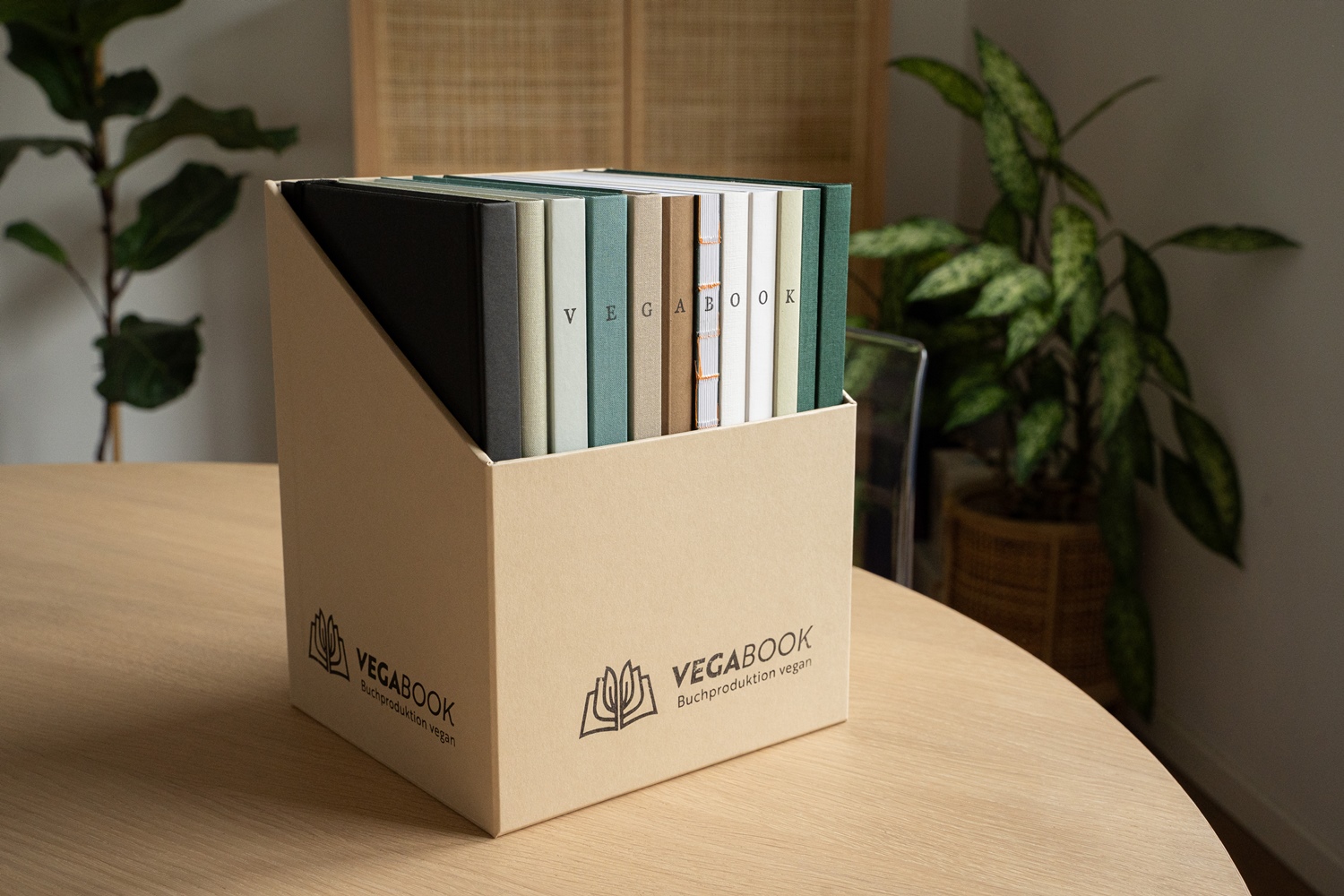
Tobias Spinner: It's an interesting thought, but no, and that's not what we're talking about. With the V-Label, we as bookbinders have been able to reach a whole new level of sustainability and ethics. We also received an increasing number of inquiries about possible vegan production for the book sector. In other words, for the bound book in top quality with thread, glue, embossing, etc.
The topic of glue in particular is very intense, as we have repeatedly found out in conversations. The shrink-wrapped animal bone glue (gelatin) in its state before it goes into the machine reminds many people of a bone for dogs to play with and eat because of the smell. When you know that one of the main components of the glue is animal bones, which then end up in the book cover during conventional book production, one or two people you talk to will briefly feel a little different.
Why did you go into vegan book production?
We need someone who can really bind books vegan, the way we need them. But not by hand, but print runs of 1,000 copies or more using industrial machinery. That was the requirement of a publisher who made the topic a priority for themselves. We took this requirement to heart about 2-3 years ago and invested a lot of sweat, know-how and financial resources to achieve it. After all, a book has about seven processing steps before it is a finished book. There can be no glue, no auxiliary materials and no other product components of animal origin.
Another important point is your own conviction that going vegan is the right way to go. It must be said that industrial book production for mass markets is not geared towards a vegan path. Unfortunately, just turning the machine on and off you go is not an option.
What opportunities and advantages do your customers have with vegan production?
We pursue ethical and sustainable aspects here, and on a whole new level. The buyer/customer of vegan book productions with the V-Label can also expect this for themselves. Through the vegan production method, we want to do our part with the customer to avoid factory farming and reduce carbon emissions even more significantly. We can still produce with the FSC logo, as well as with recycled paper and many other sustainable aspects; plus the issue of animal welfare! It is another label, but with a completely new “lever” for the customers.
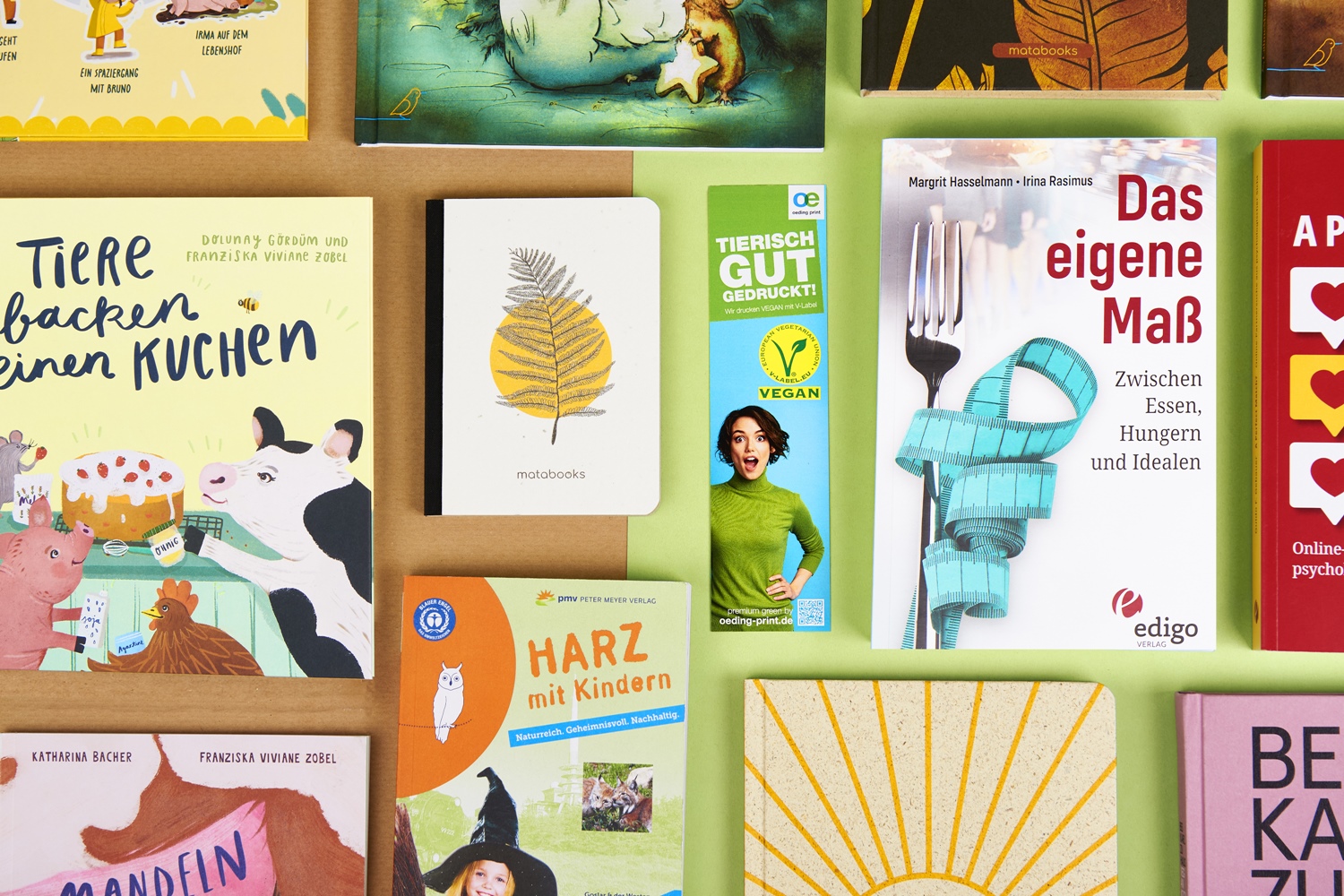
Vegan printed matter covers a wide range of products: books and brochures, flyers and bookmarks, as well as packaging.

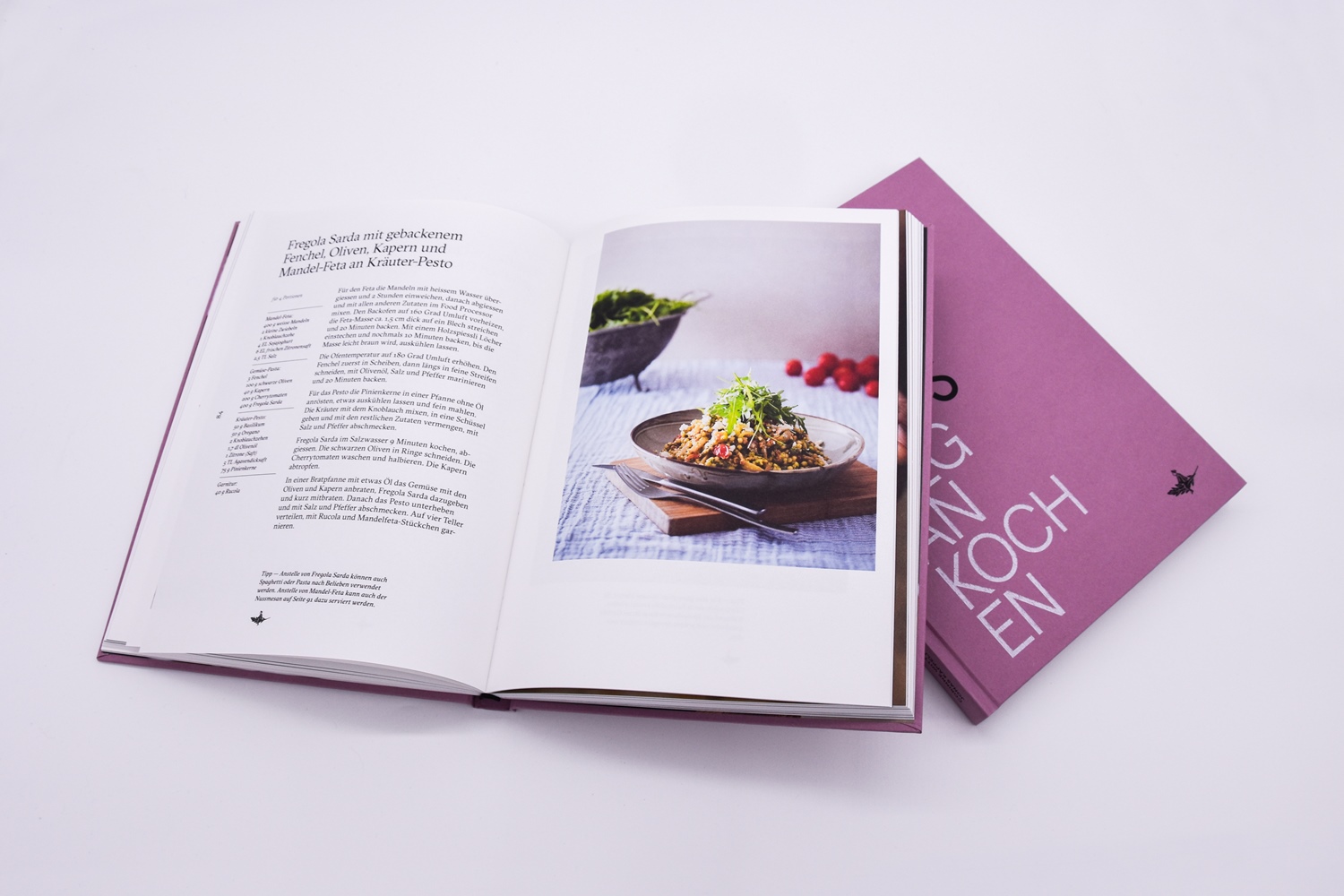
Vegan cookbook – consistently printed vegan.
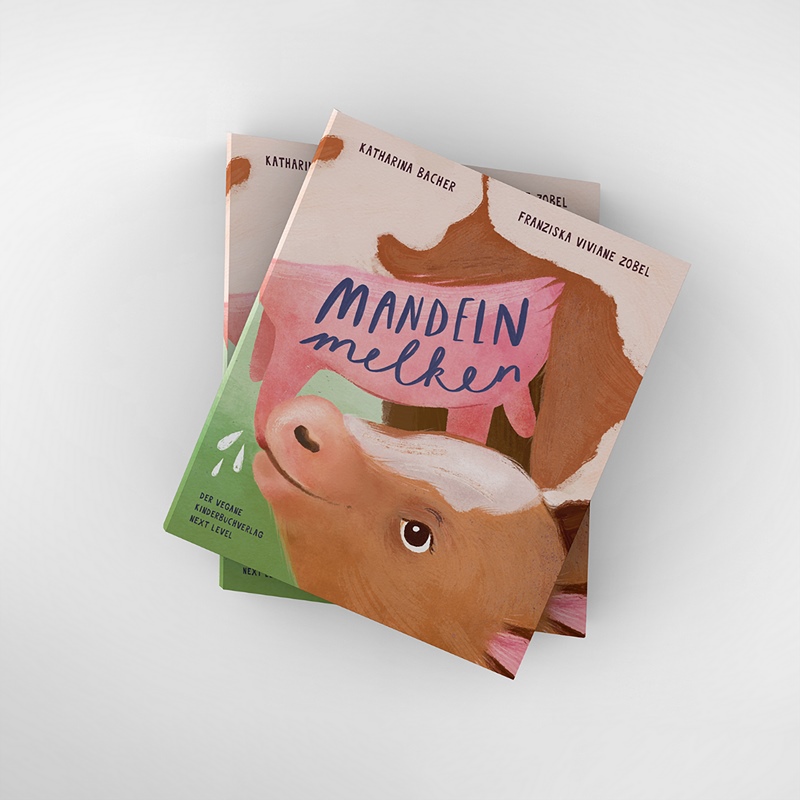
“Mandeln melken” by K. Bacher and F. Zobel, published by the vegan children’s book publisher Next Level 2022, vegan printed by oeding print.
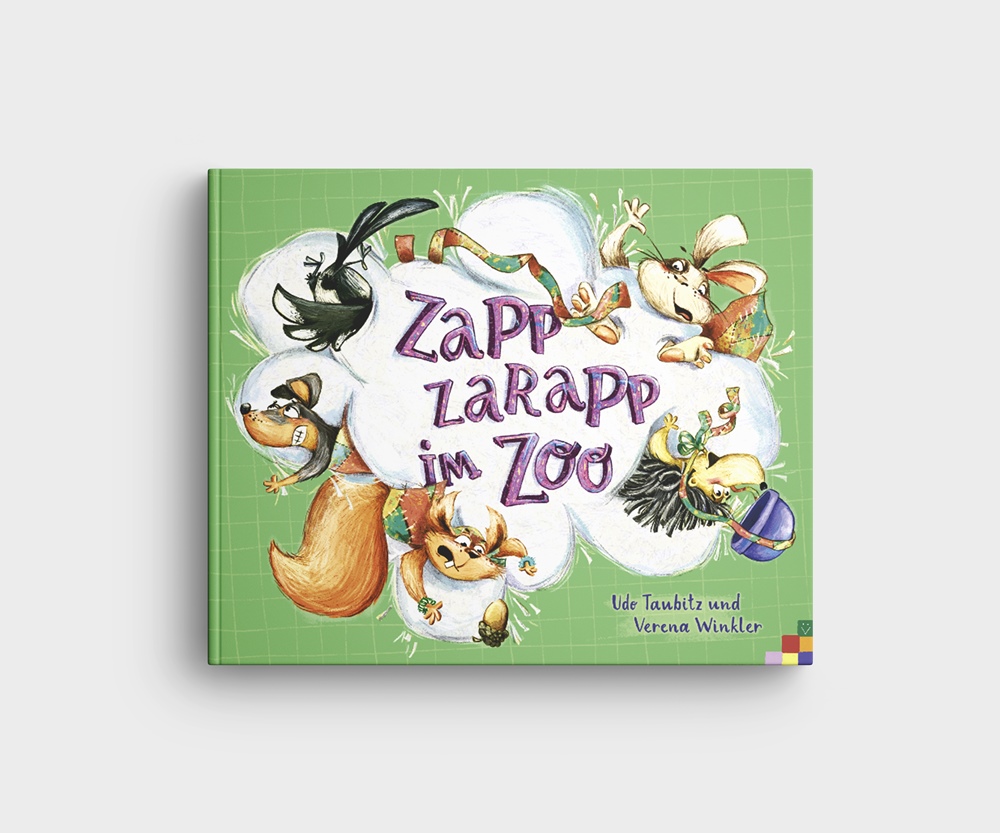
“Zappzarapp im Zoo” by U. Taubitz and V. Winkler, published on November 1, 2024 by the vegan children’s book publisher Next Level, produced vegan by the bookbindery Spinner.
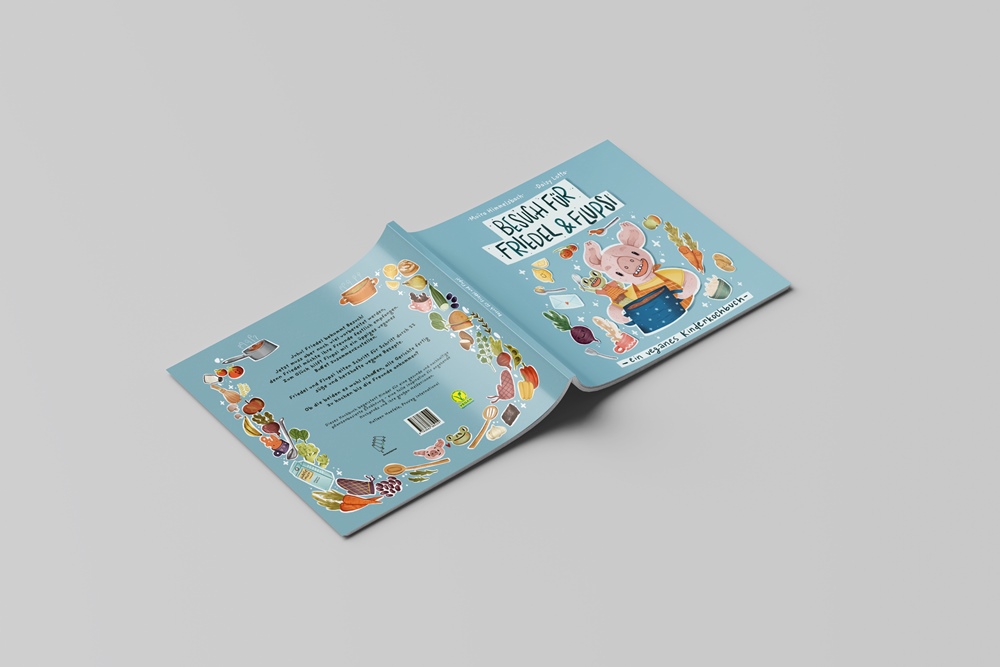
“Besuch für Friedel und Flupsi” by D. Lotta and M. Himmelsbach, published by the vegan children’s book publisher Next Level 2022, vegan printed by oedingprint.
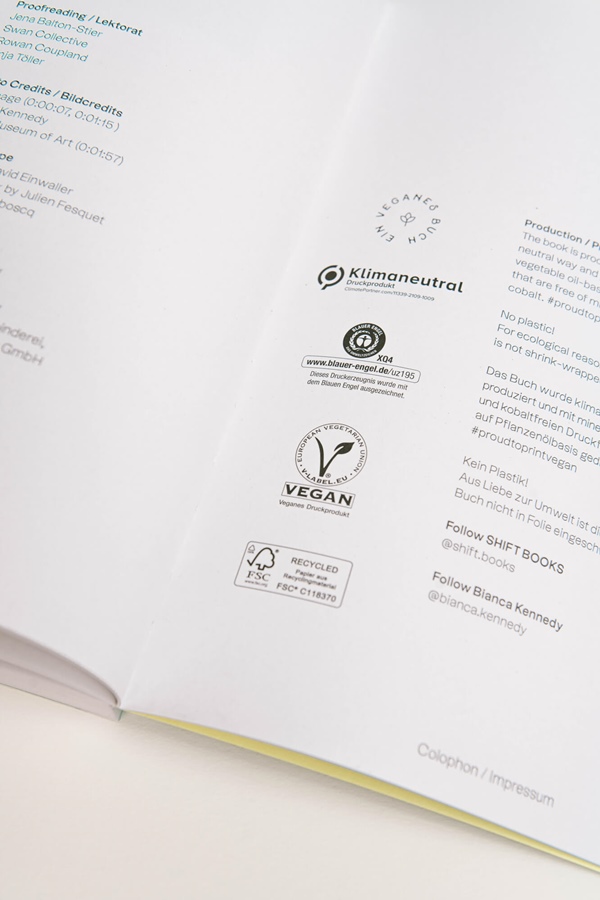
The V-Label – the perfect complement to well-known environmental labels.
Authors: sbr, Sandra Hartwig, Moïra Himmelsbach, Roland Makulla, Tobias Spinner
Editor: sbr
Images: oeding print GmbH [1,4]; Buchbinderei Spinner [2]; ProVeg [3]; Der vegane Kinderbuchverlag Next Level [5,6,7]; Helena-Melikov | SHIFT BOOKS [8]
Content

